
Truck accidents in St. Louis, Missouri, can result in serious injuries, expensive medical treatment, vehicle damage, and long-term financial difficulties. Collisions involving tractor-trailers, delivery trucks, and other commercial vehicles can raise complicated questions about driver conduct, trucking company responsibilities, vehicle maintenance, and federal safety regulations.
People searching for St. Louis truck accident attorneys often want to understand who may be responsible for a collision, what compensation may be available, and how long they have to take legal action. The answers depend on the accident’s circumstances, the location where it occurred, the evidence available, and the laws that apply.
This guide explains common causes of truck accidents, potential liability, Missouri and Illinois legal deadlines, federal trucking regulations, and the types of losses that may be considered in an injury claim.
Legal Guide 360 provides general legal information for educational purposes. This article does not constitute legal advice or establish an attorney-client relationship.
Learn your legal rights after a Nashville 18-wheeler accident, including liability, compensation, deadlines, and steps to protect your claim.
Understanding Truck Accidents in St. Louis

St. Louis is an important transportation and distribution center, with commercial traffic moving through the metropolitan area and along major interstate routes. Collisions involving large commercial vehicles can be particularly serious because trucks generally weigh considerably more than passenger cars and may require greater distances to stop.
The consequences of a truck accident vary. Some collisions result in relatively minor property damage, while others cause fractures, traumatic brain injuries, spinal cord injuries, or permanent disabilities. Injured people may require emergency treatment, surgery, rehabilitation, or continuing medical care.
Truck accident claims may also involve more evidence than a typical passenger vehicle collision. Investigators may need to review driver logs, electronic logging device data, vehicle inspection records, cargo documents, maintenance histories, and information about the trucking company’s operations.
How St. Louis Truck Accident Attorneys Evaluate Liability

Determining responsibility after a commercial truck accident requires an examination of the available evidence and the conduct of the parties involved. A truck driver may be responsible if negligent driving contributed to the collision. However, depending on the facts, other parties may also have legal responsibility.
Potentially responsible parties can include truck drivers, trucking companies, vehicle maintenance providers, cargo-loading companies, and manufacturers of defective vehicle components.
Not every truck accident involves multiple liable parties. Responsibility must be assessed based on the evidence, the applicable legal duties, and the connection between the alleged conduct and the harm suffered.
Missouri Comparative Fault Rules

Missouri generally follows a pure comparative fault system for negligence claims. Under this principle, an injured person’s damages may be reduced in proportion to the person’s share of responsibility for the accident.
For further information, consult Missouri Courts — Comparative Fault Guidance.
For example, if a claimant’s damages are determined to be $100,000 and the claimant is found 20% responsible, a reduction of 20% would leave $80,000 before any other applicable adjustments. This is a simplified illustration, not a prediction of the outcome of an actual case.
Missouri’s comparative fault rules should not automatically be applied to a crash that occurred in Illinois or another state. The governing law depends on the circumstances and jurisdiction.
Legal Deadlines for Truck Accident Claims

A statute of limitations sets a period within which a lawsuit generally must be filed. Missing an applicable deadline may affect the ability to pursue a claim, although the specific consequences and exceptions depend on the law.
Missouri Personal Injury Claims
Under Missouri Revised Statutes § 516.120, many personal injury actions are generally subject to a five-year limitation period.
However, the five-year period should not be treated as a guaranteed deadline for every truck accident claim. Special rules may apply to particular defendants or claims, and other circumstances may affect how a deadline is calculated.
Missouri Wrongful Death Claims
When a truck accident causes a death, eligible parties may have a wrongful death claim under Missouri law.
Missouri Revised Statutes § 537.100 generally provides a three-year limitation period for wrongful death actions, subject to the statute’s terms and applicable qualifications.
Who may bring a claim and when the deadline begins can depend on the circumstances.
Illinois Personal Injury Claims
The St. Louis metropolitan area extends into Illinois, so the location of a collision can affect the law that applies.
Under Illinois Code of Civil Procedure § 13-202, many Illinois personal injury actions are generally subject to a two-year limitation period. Exceptions may apply, and wrongful death claims or other types of legal actions may be governed by different provisions.
Illinois also has a comparative negligence statute, 735 ILCS 5/2-1116, which addresses the effect of a claimant’s share of fault on recovery.
Deadline reminder: These periods are general information, not a determination of the deadline for a specific case. Special circumstances may change the applicable period. Confirm the relevant law with a qualified attorney as early as reasonably possible.
Federal Trucking Regulations and Their Role in Accident Claims
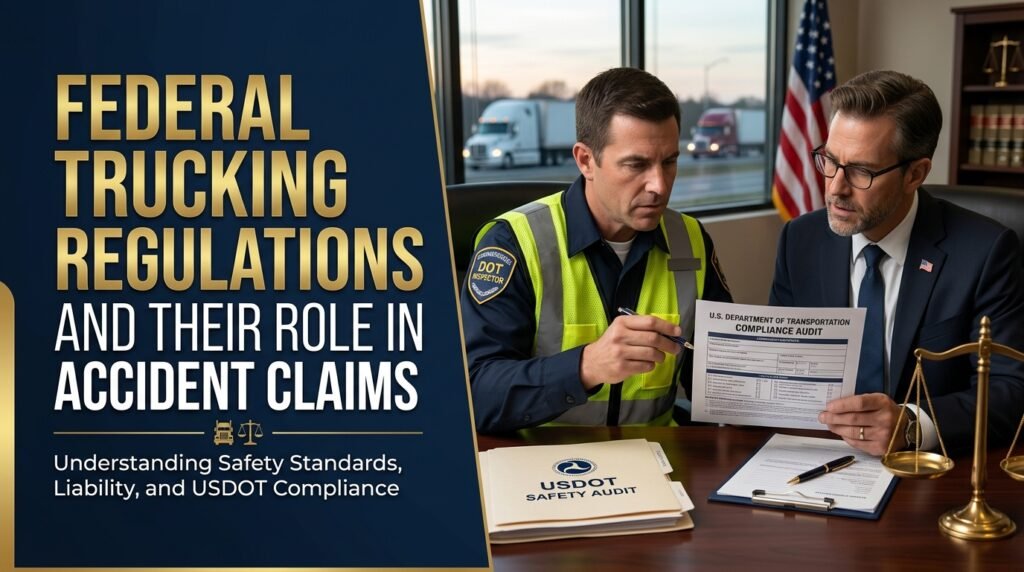
Many commercial motor vehicles are subject to regulations administered by the Federal Motor Carrier Safety Administration (FMCSA). These regulations address matters such as driver hours, vehicle inspection, maintenance, and commercial motor vehicle safety.
The official FMCSA Hours-of-Service Summary explains federal driving-time and rest requirements for commercial drivers.
For many property-carrying commercial drivers, federal hours-of-service rules generally include:
- 11-hour driving limit: A driver may generally drive up to 11 hours after 10 consecutive hours off duty.
- 14-hour driving window: A driver generally may not drive beyond the 14th consecutive hour after coming on duty following the required off-duty period.
- 30-minute interruption: A driver generally must take a qualifying 30-minute interruption after eight cumulative hours of driving without at least 30 consecutive minutes of interruption.
Exceptions and additional requirements may apply depending on the operation and circumstances.
A suspected hours-of-service violation does not automatically establish that the violation caused a collision or that a particular party is legally liable. The facts and applicable law must be evaluated.
Evidence That May Support a Truck Accident Claim
Evidence can help establish how a collision occurred, who may be responsible, and what losses resulted. Potentially relevant evidence includes police reports, photographs, witness statements, electronic logging device data, vehicle inspection and maintenance records, cargo documents, medical records, employment records, and expert analysis.
Not every case requires all these records or expert testimony. The evidence needed depends on the nature of the collision and the issues in dispute.
What Compensation May Be Available After a Truck Accident?
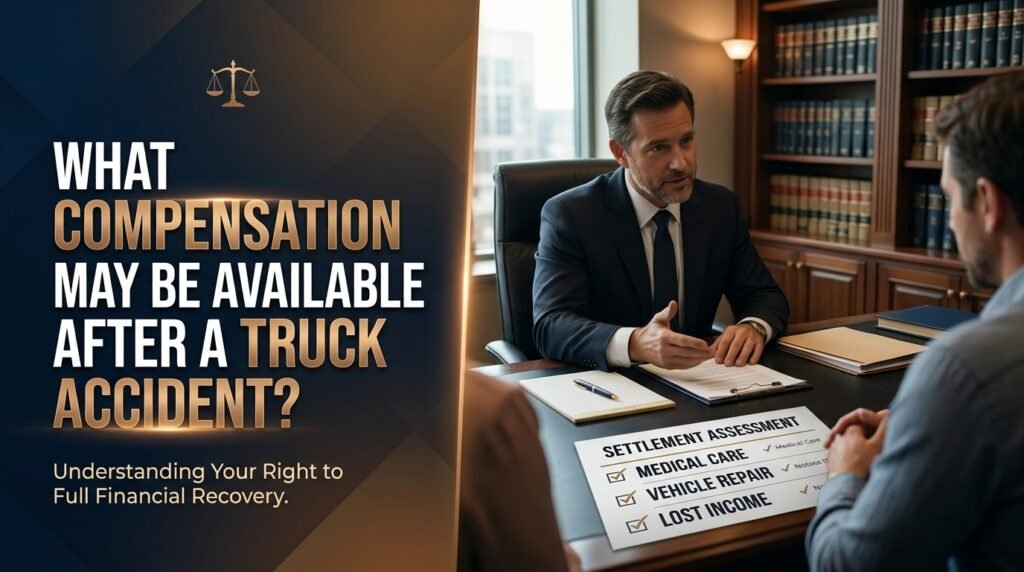
The compensation potentially available after a truck accident depends on the facts, applicable law, proof of liability, and the losses that can be established. No particular settlement or award is guaranteed simply because a person was injured in a commercial vehicle collision.
Depending on the circumstances, recoverable damages may include medical expenses, lost income, reduced earning capacity, pain and suffering, property damage, and eligible wrongful death damages.
Any assessment of damages should account for the available evidence, applicable law, potential comparative fault, and relevant insurance coverage.
What to Do After a Truck Accident in St. Louis

- Prioritize safety. Move away from immediate danger if it is safe to do so and contact emergency services when necessary.
- Seek medical attention. Some injuries may not be immediately apparent, so prompt medical evaluation can be important.
- Report the accident. Contact the appropriate authorities when required and keep the report number if one is provided.
- Preserve available evidence. If safe, photograph vehicle damage and road conditions, and retain relevant documents.
- Be careful when discussing the claim. Understand the terms of a settlement or release before signing.
- Check the applicable deadline. Missouri and Illinois may apply different limitation periods, and exceptions may apply.
- Consider getting legal advice. A qualified attorney can assess the facts, potential claims, and applicable deadlines.
Frequently Asked Questions About St. Louis Truck Accidents
How long do I have to file a truck accident lawsuit in St. Louis?
Many Missouri personal injury actions are generally subject to a five-year limitation period under Missouri Revised Statutes § 516.120. In Illinois, many personal injury actions are generally subject to a two-year limitation period under 735 ILCS 5/13-202. Exceptions and other legal rules may affect a particular claim.
Who may be responsible for a commercial truck accident?
Depending on the evidence, potentially responsible parties may include the truck driver, trucking company, maintenance provider, cargo-loading company, or manufacturer of a defective component. Liability depends on the facts and applicable law.
Can I pursue compensation if I was partly responsible for the crash?
Missouri generally follows pure comparative fault principles for negligence claims. Illinois applies a modified comparative negligence rule under 735 ILCS 5/2-1116. The rules differ, so the jurisdiction and circumstances must be considered.
Does a trucking regulation violation automatically prove negligence?
No. A possible regulatory violation may be relevant evidence, but its legal effect depends on the applicable rule, the circumstances, and the relationship between the violation and the accident.
How much is a St. Louis truck accident claim worth?
There is no standard amount for every claim. Potential compensation may depend on the severity of the injuries, medical expenses, lost income, future limitations, evidence of fault, comparative responsibility, and available insurance coverage.
Conclusion:
Truck accidents in St. Louis can involve serious injuries, complex evidence, multiple potentially responsible parties, and legal deadlines that vary according to the circumstances. Understanding liability, comparative fault, federal trucking regulations, and potential damages can help readers identify the issues that may matter after a collision.
People searching for St. Louis truck accident attorneys should pay particular attention to where the accident occurred, what evidence is available, and which legal deadline applies. Missouri and Illinois have different rules, so assumptions based on a general online guide may not fit every situation.
5 thoughts on “St. Louis Truck Accident Attorneys: Laws, Liability, and Legal Deadlines”