
Oilfield work can expose employees to dangerous machinery, high-pressure systems, fires, chemical hazards, and heavy equipment. When an accident occurs, workers may face serious injuries, lost income, and uncertainty about who is responsible. Houston oilfield injury attorneys can help injured workers understand their legal options, investigate the circumstances of an accident, and determine whether a workers’ compensation claim or personal injury lawsuit may be available.
The legal process depends on several factors, including the worker’s employment status, the employer’s insurance coverage, the companies involved, and where the accident happened. Some cases fall under Texas law, while certain offshore incidents may involve federal maritime law. Understanding these distinctions can help injured workers make informed decisions about their next steps.
Learn your legal rights after a Nashville 18-wheeler accident, including liability, compensation, deadlines, and steps to protect your claim.
Understanding Oilfield Injuries in Houston

Houston is an important center for the Texas oil and gas industry, with connections to drilling operations, refineries, pipeline systems, equipment suppliers, and offshore energy projects. Oilfield employees may work at drilling sites, production facilities, processing plants, or other industrial locations where safety procedures and properly maintained equipment are essential.
An accident may result from equipment failure, an unsafe work area, inadequate training, or a failure to follow required safety procedures. Some injuries are immediately apparent, while others, including certain respiratory conditions or injuries caused by chemical exposure, may develop or become more noticeable over time.
After an oilfield accident, important questions include what caused the incident, which parties were involved, and what legal remedies may apply. The answers depend on the available evidence and the specific circumstances of the injury.
Why Contact Houston Oilfield Injury Attorneys After an Accident?

Oilfield accident claims can involve multiple companies, contractors, insurers, and safety records. Determining responsibility may require examining equipment maintenance, site conditions, work assignments, and applicable safety requirements.
Houston oilfield injury attorneys may help injured workers by:
- Reviewing the circumstances surrounding the accident.
- Identifying potentially responsible companies or individuals.
- Gathering relevant photographs, incident reports, and witness statements.
- Reviewing employment agreements and insurance information.
- Assessing medical records and documentation of financial losses.
- Communicating with insurers and other parties involved in the claim.
- Evaluating whether a settlement or lawsuit may be appropriate.
Not every workplace accident results in a valid negligence claim. A legal assessment should consider the evidence, applicable law, and available routes for seeking compensation.
What Are the Most Common Oilfield Accident Injuries?

Oilfield incidents can cause injuries ranging from cuts and fractures to permanent disabilities. The severity depends on the nature of the accident, the equipment involved, and the worker’s exposure to the hazard.
Common injuries may include:
- Burn Injuries: Fires, explosions, hot surfaces, and chemical contact can cause burns that require extensive treatment.
- Traumatic Brain Injuries: Falls, falling objects, and machinery-related impacts may result in concussions or more serious brain injuries.
- Spinal Cord Injuries: Falls and crushing incidents can damage the spine and may lead to lasting mobility limitations.
- Broken Bones and Fractures: Heavy equipment, falling materials, and falls can cause fractures that require surgery or rehabilitation.
- Crush Injuries: Workers may be injured when caught between machinery, vehicles, or other heavy objects.
- Amputations and Severe Lacerations: Unguarded machinery and equipment malfunctions can cause devastating injuries.
- Respiratory Injuries: Exposure to certain gases, fumes, dust, or hazardous substances may affect breathing and long-term lung health.
- Hearing Damage: Repeated exposure to excessive industrial noise can contribute to permanent hearing loss.
- Chemical Injuries: Contact with corrosive or hazardous substances can damage the skin, eyes, or internal organs.
Some injuries require continuing medical care, rehabilitation, assistive equipment, or adjustments to daily activities. Medical records and professional evaluations can help establish the nature of the injury and its impact on the worker’s life.
If you have been injured at an oilfield site, consider obtaining medical attention promptly and keeping copies of your treatment records. A qualified attorney can explain which legal options may be available based on your circumstances.
How Can Oilfield Workers Reduce Workplace Risks?
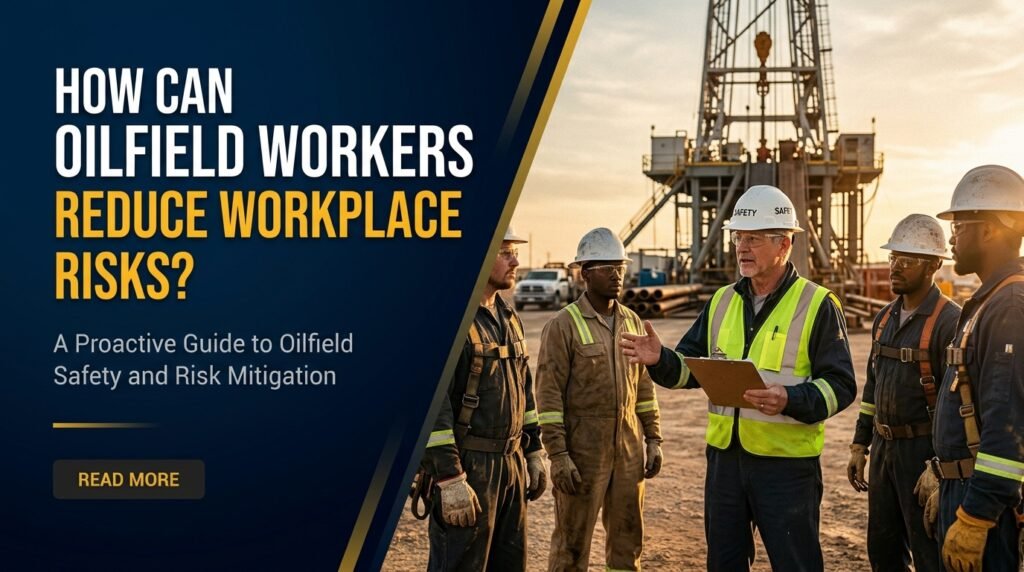
Oilfield work involves hazards that cannot always be eliminated, but appropriate safety practices can reduce preventable risks. Employers and workers should follow applicable safety requirements, use equipment correctly, and report dangerous conditions.
Practical safety measures include:
- Use Appropriate Protective Equipment: Wear the protective gear required for the task and worksite.
- Follow Established Procedures: Observe site-specific rules for equipment operation, hazardous materials, and emergency response.
- Inspect Tools and Machinery: Report damaged, defective, or improperly maintained equipment before using it.
- Complete Required Training: Understand the equipment, hazards, and safety procedures associated with assigned duties.
- Maintain Situational Awareness: Pay attention to moving machinery, vehicle traffic, suspended loads, and nearby workers.
- Report Unsafe Conditions: Notify the appropriate supervisor or safety personnel when a hazard is identified.
- Follow Substance-Use Rules: Never operate machinery or perform safety-sensitive duties while impaired.
- Understand Emergency Procedures: Know how to report an incident, obtain medical assistance, and respond to an emergency.
Safety precautions are important, but an injured worker should not assume that an accident was their fault simply because it occurred at a hazardous workplace. The circumstances and available evidence should be examined before responsibility is determined.
What Should I Do After an Oilfield Accident?
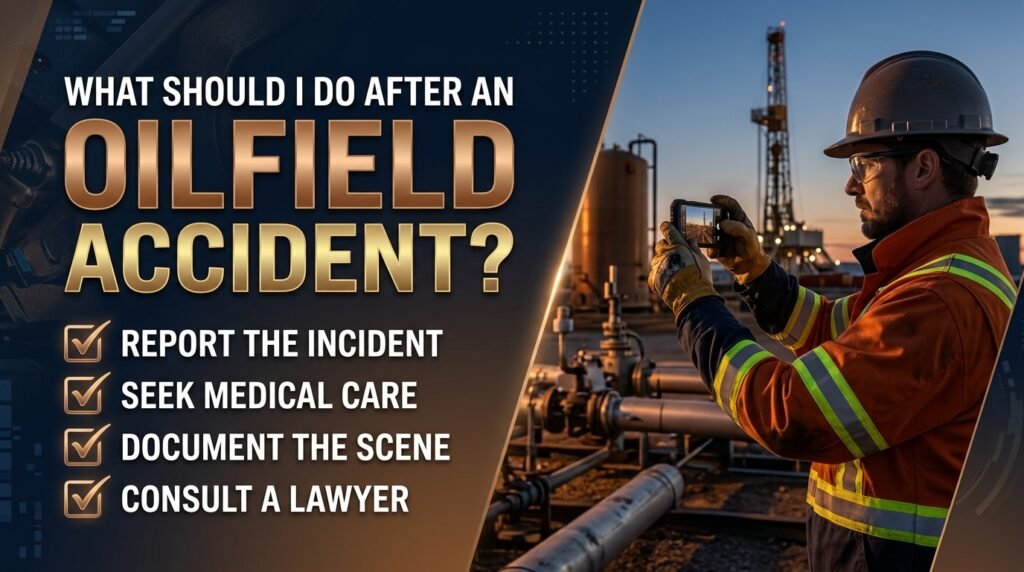
The steps taken after an oilfield accident can affect medical treatment, documentation, and the handling of a potential claim. The appropriate response depends on the seriousness of the incident and the immediate safety risks.
1. Get Medical Attention
Seek emergency assistance for serious injuries. Even if an injury initially appears minor, a medical evaluation may identify problems that are not immediately obvious. Follow the treating professional’s instructions and keep records of appointments, diagnoses, medication, and treatment.
2. Report the Incident
Notify the appropriate supervisor or employer representative as soon as reasonably possible. Follow the applicable reporting procedure and retain a copy of any written incident report if available.
3. Preserve Relevant Evidence
When it is safe and lawful to do so, preserve photographs of the location, equipment, visible injuries, and any conditions that may have contributed to the accident. Do not enter a hazardous area or interfere with an emergency response to collect evidence.
4. Identify Witnesses
Record the names and contact details of coworkers or other people who witnessed the incident, if doing so is safe and permitted. Their observations may help clarify what happened.
5. Keep Employment and Financial Records
Save relevant pay statements, work schedules, employment documents, medical bills, receipts, and communications about the incident. These materials may help document missed work and accident-related expenses.
6. Be Careful With Insurance Communications
Provide accurate information when reporting the incident, but consider obtaining legal advice before signing a settlement or release you do not understand. Keep copies of written communications and documents you receive.
7. Ask About Your Legal Options
A lawyer familiar with oilfield injury cases can review the facts, explain potential claims, and identify deadlines that may apply. If the incident occurred offshore or involved a vessel, the legal analysis may differ from an accident at an onshore Texas worksite.
Understanding Texas Oilfield Injury Laws and Workers’ Rights
Oilfield injury claims do not all follow the same legal process. The available options may depend on whether the employer carries Texas workers’ compensation insurance, whether another company contributed to the accident, and whether federal maritime law applies.
Workers’ Compensation Coverage
Texas generally allows private employers to choose whether to carry workers’ compensation insurance. Employers that do not provide this coverage are commonly called non-subscribers and must comply with applicable notification and reporting requirements.
An injured worker’s options may differ depending on the employer’s coverage status. Workers’ compensation benefits, claims involving non-subscribing employers, and lawsuits against third parties involve different legal rules.
For further information, visit the Texas Department of Insurance’s official page on workers’ compensation coverage for employers.
Third-Party Injury Claims
An oilfield accident may involve companies other than the injured worker’s direct employer. Depending on the evidence, a potentially responsible third party could include an equipment manufacturer, maintenance contractor, subcontractor, or another company operating at the site.
Texas law allows certain injured workers to pursue claims against responsible third parties even when workers’ compensation benefits are also involved. However, a third-party claim requires a legal basis for holding that party responsible, and insurance reimbursement issues may arise.
The relevant statutory rules appear in Texas Labor Code Chapter 417: Third-Party Liability.
Offshore and Maritime Injury Claims
Some workers involved in offshore oil and gas operations may have rights under federal maritime law. Depending on the worker’s duties, connection to a vessel, and other legal requirements, a claim might involve the Jones Act or other maritime doctrines.
Working near the ocean or on an offshore platform does not automatically mean the Jones Act applies. Eligibility depends on the specific facts and legal standards governing the worker’s role.
For the statutory provision governing qualifying seamen’s injury claims, see 46 U.S. Code § 30104 — Personal Injury to or Death of Seamen.
Because different legal frameworks can produce different procedures and deadlines, workers should establish which law applies before making assumptions about their rights.
What Causes Oilfield Accidents?
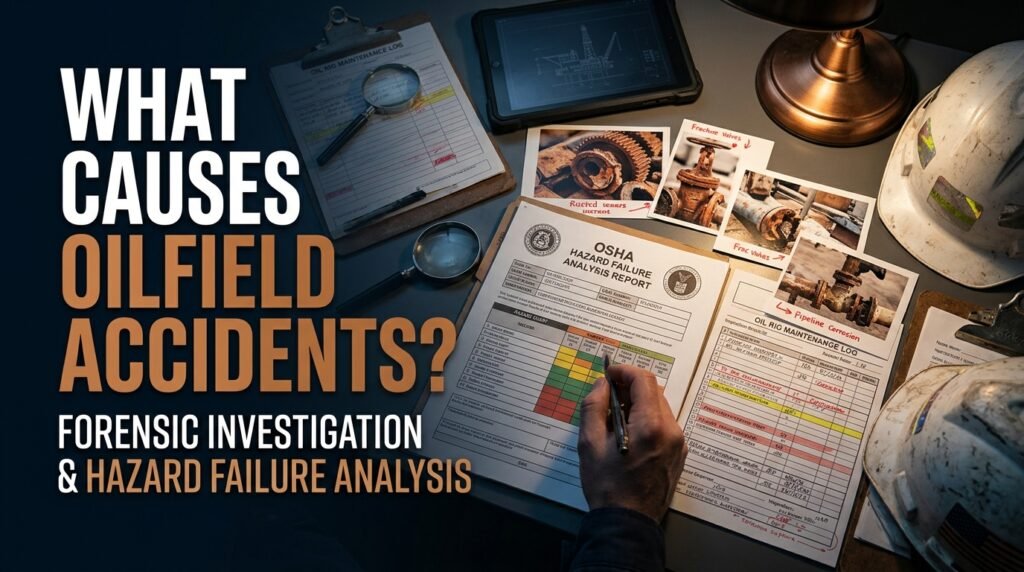
An investigation may reveal one or more contributing factors. Identifying the cause can help determine whether an employer, contractor, manufacturer, or another party may be legally responsible.
Explosions and Fires
Oil and gas operations can involve flammable substances, pressurized systems, and other hazards. A fire or explosion may require an examination of equipment condition, operating procedures, warning systems, and the events immediately preceding the incident.
Equipment Failures
Drilling machinery, lifting equipment, vehicles, and industrial tools can create serious hazards if they malfunction. Investigators may need to review inspection records, maintenance history, operating instructions, and potential product defects.
Unsafe Worksite Conditions
Unsecured materials, inadequate access routes, poor housekeeping, and insufficient safeguards may contribute to falls or other injuries. Whether these conditions establish legal responsibility depends on the applicable duties and evidence.
Hazardous Chemical Exposure
Oilfield workers may encounter substances that can injure the skin, eyes, or respiratory system. An investigation may examine the chemicals involved, available warnings, protective equipment, ventilation, and exposure records.
Inadequate Training or Supervision
Workers may face unnecessary risks if they are not adequately instructed on equipment, emergency procedures, or site-specific hazards. Evidence about training and supervision may be relevant when evaluating the cause of an accident.
Slips, Trips, and Falls
Uneven surfaces, spills, unsecured cables, poorly maintained walkways, and unsafe access points can contribute to workplace falls. Investigators should assess the conditions at the time of the incident rather than assume that every fall resulted from negligence.
Who Can Be Held Liable for an Oilfield Accident?

Oilfield projects often involve several businesses performing different roles. Depending on the circumstances, more than one party may have contributed to an injury.
Potentially responsible parties may include:
- Employers: Depending on their legal status and applicable law, an employer may face a claim involving unsafe work practices or other failures.
- Drilling Contractors: A contractor may be responsible for certain operational activities or site conditions.
- Subcontractors: A subcontractor’s conduct may contribute to an accident involving workers from another company.
- Equipment Manufacturers: A manufacturer may face a product-liability claim if a qualifying defect caused or contributed to the injury.
- Maintenance Providers: Improper repair or inspection work may be relevant if it contributed to an equipment failure.
- Property or Site Operators: Responsibility may depend on the party’s control of the location, its legal duties, and the circumstances of the accident.
These are possible categories, not automatic findings of liability. A successful claim generally requires evidence supporting the applicable legal elements against the party being sued.
Third-Party Claims After an Oilfield Injury
A third-party claim may be possible when a company or individual other than the direct employer contributed to the accident. For example, a defective component or another contractor’s unsafe work may be relevant to the investigation.
Depending on the claim and governing law, recoverable damages may differ from benefits available through workers’ compensation. The relationship between a third-party recovery and workers’ compensation benefits should be reviewed carefully.
Employee or Independent Contractor Status
Oilfield workers may be described in contracts as employees or independent contractors. However, a label in an agreement does not necessarily resolve every legal question about a worker’s status.
Classification can affect which laws apply, what benefits may be available, and whether a particular claim can proceed. The analysis may involve the actual working relationship, contractual terms, and applicable legal standards.
How Can an Oilfield Injury Attorney Help With a Claim?

The work involved in an oilfield injury claim depends on its complexity, the severity of the injuries, and the number of parties involved. A lawyer may assist with several parts of the process.
Investigating the Accident
Relevant evidence may include incident reports, photographs, witness accounts, maintenance logs, training records, and information about the equipment involved. In some cases, technical specialists may be needed to evaluate how the accident occurred.
Evaluating Potentially Responsible Parties
An attorney may examine the roles of the employer, site operator, contractors, equipment suppliers, and other parties. The goal is to identify which parties may be legally responsible based on the evidence.
Documenting the Losses
Medical records, employment documents, wage information, and expert assessments may help establish the effects of an injury. The extent of the documentation needed depends on the nature of the claim.
Communicating With Insurers
A lawyer may handle communications with relevant insurance companies, review settlement proposals, and explain the possible consequences of accepting an offer.
Negotiating or Filing a Lawsuit
Some claims resolve through settlement. Others require litigation when the parties disagree about liability or the value of the losses. Whether to accept an offer or proceed with a lawsuit depends on the specific facts and legal advice.
What Compensation May Be Available After an Oilfield Accident?
The compensation available depends on the applicable legal framework, the evidence, the nature of the injury, and any limits imposed by law. No particular recovery is guaranteed.
In an eligible personal injury claim, potentially recoverable damages may include:
- Medical Expenses: Reasonable and legally recoverable costs associated with treatment, surgery, rehabilitation, and future medical care.
- Lost Income: Compensation for qualifying wages lost because of the injury.
- Reduced Earning Capacity: Damages for a proven effect on the worker’s ability to earn income in the future.
- Physical Pain: Compensation for qualifying physical pain and suffering.
- Mental Anguish: Damages for mental or emotional suffering when recoverable under the applicable law.
- Physical Impairment: Compensation for qualifying limitations affecting normal activities.
- Disfigurement: Damages that may apply to permanent scarring or other lasting changes in appearance.
- Wrongful Death Losses: In qualifying cases, eligible surviving family members may seek damages allowed under the applicable law.
These categories do not necessarily apply to every case. Workers’ compensation benefits and civil lawsuit damages are not interchangeable, and the governing law determines which forms of recovery are available.
Can Punitive or Exemplary Damages Be Recovered?
Punitive damages are not awarded automatically because an accident caused serious injuries. In Texas, exemplary damages are governed by specific statutory requirements, including applicable standards of proof and procedural rules.
Whether these damages can be considered depends on the facts and the law governing the claim. An attorney should assess the evidence before suggesting that exemplary damages may be available.
How Long Do I Have to File an Oilfield Injury Lawsuit in Texas?
Under Texas Civil Practice and Remedies Code § 16.003, many personal injury lawsuits generally must be filed within two years after the claim accrues. The statute also addresses claims involving injuries resulting in death.
However, the deadline applicable to an individual oilfield injury case may differ because of the type of claim, the parties involved, or a different governing law. Maritime claims and claims involving special circumstances may have separate requirements.
Workers should not assume that reporting an accident to an employer or opening an insurance claim automatically satisfies a lawsuit filing deadline. Obtaining advice promptly can help identify the relevant deadlines.
How Long Does an Oilfield Injury Case Take?
There is no single timeline for resolving an oilfield injury claim. Some matters may resolve through negotiations, while others require extensive investigation, expert analysis, or a trial.
Factors that can affect the timeline include:
- The seriousness and long-term effects of the injury.
- The number of potentially responsible parties.
- Disputes over how the accident occurred.
- The availability of records and witnesses.
- Whether medical treatment is ongoing.
- The willingness of the parties to negotiate.
- Court schedules and litigation requirements.
A reliable estimate requires an assessment of the particular case. Workers should be cautious of anyone who promises a guaranteed settlement amount or a specific resolution date before reviewing the facts.
Will an Oilfield Injury Case Go to Trial?
Not every claim proceeds to trial. Depending on the evidence and applicable law, the parties may reach a settlement before a lawsuit is filed or while litigation is underway.
A trial may become necessary if the parties cannot resolve disagreements about responsibility or compensation. An attorney can explain the potential advantages, risks, expenses, and uncertainties associated with settlement and litigation.
The decision should be based on the evidence and the worker’s circumstances, rather than an assumption that every case should settle or go to trial.
How Much Does It Cost to Hire Houston Oilfield Injury Attorneys?
Legal fees depend on the attorney, the type of claim, and the fee agreement. Some personal injury attorneys handle qualifying cases on a contingency-fee basis, meaning the fee is tied to a recovery rather than charged entirely as an upfront hourly payment.
However, contingency arrangements are not universal, and the agreement may address litigation expenses and other costs separately. Before hiring a lawyer, ask for a written explanation of the fee percentage, case expenses, and what happens if there is no recovery.
Do not assume that every firm offers a free consultation or the same fee arrangement. Confirm those details directly with the law firm.
Wrongful Death Claims After a Fatal Oilfield Accident
A fatal oilfield accident can have lasting financial and emotional consequences for a worker’s family. Depending on the circumstances, eligible family members or a legally authorized representative may be able to pursue a wrongful death or related claim.
Potential losses may include qualifying financial support, loss of companionship, and other damages permitted by the applicable law. The people entitled to bring a claim, the available damages, and the filing deadline depend on the governing legal framework.
Families should preserve relevant employment, financial, and incident records where possible and seek legal guidance to understand their options.
Frequently Asked Questions About Oilfield Injury Claims
What Should I Do if I Am Injured on an Oilfield Site?
Seek medical attention, report the incident through the appropriate procedure, and preserve relevant records. If it is safe and lawful, document the scene and identify witnesses. Consider speaking with a qualified attorney to understand the legal options that may apply.
Can I Sue My Employer for an Oilfield Injury in Texas?
The answer depends in part on the employer’s workers’ compensation status and the facts of the incident. Texas permits private employers to choose whether to carry workers’ compensation coverage, and different rules may apply to subscribing and non-subscribing employers. A separate claim against a third party may also be possible when the legal requirements are met.
Can I File a Claim Against a Company Other Than My Employer?
Potentially. If a contractor, manufacturer, maintenance provider, or another third party contributed to the accident, there may be grounds for a separate claim. Liability depends on the evidence and the applicable law.
Does the Jones Act Apply to Every Offshore Oilfield Worker?
No. The Jones Act applies to qualifying seamen, and eligibility depends on the worker’s duties and connection to a vessel, among other legal requirements. Working offshore alone does not establish that a worker qualifies.
What if I Was Partly Responsible for the Accident?
The effect of a worker’s own conduct depends on the applicable law and the facts of the case. Different rules may govern a Texas personal injury claim, a workers’ compensation matter, or a maritime claim. A legal assessment is needed before determining how fault may affect recovery.
Can I Recover Compensation for Long-Term or Permanent Injuries?
Potentially, if the applicable law allows the relevant damages and the evidence supports them. Medical evaluations, treatment records, and evidence of the injury’s effect on future work and daily activities may be important when assessing a claim.
How Much Is an Oilfield Injury Claim Worth?
There is no reliable standard amount for every case. The severity of the injury, medical expenses, lost income, future limitations, available evidence, liability issues, and governing law can all affect the potential value. An estimate should not be treated as a guaranteed outcome.
How Long Do I Have to Take Legal Action?
Many Texas personal injury lawsuits are subject to a general two-year limitations period, but exceptions and different legal rules may apply. Because oilfield cases can involve multiple legal frameworks, confirm the specific deadline for your claim as early as possible.
Conclusion: Understanding Your Options After an Oilfield Injury
An oilfield accident can affect a worker’s health, income, family responsibilities, and future employment. Understanding the cause of the accident and the legal framework that applies is an important step toward deciding how to proceed.
Houston oilfield injury attorneys can review the circumstances of an accident, explain potential claims, and help identify the evidence needed to evaluate liability and damages. The appropriate legal strategy will depend on the facts, the parties involved, and the law governing the case.
If you or a family member has suffered an oilfield injury, consider seeking qualified legal advice about your options, relevant deadlines, and the process for pursuing a claim. Before hiring a law firm, verify its experience, fee agreement, and ability to handle the type of case involved.
1 thought on “Houston Oilfield Injury Attorneys: Texas Laws, Claims, and Compensation”