
Construction sites involve heavy machinery, elevated platforms, power tools, and changing work conditions. When safety measures fail, workers can suffer serious injuries that affect their health, income, and ability to return to work.
Construction site accidents attorneys help injured workers understand their legal options after a job-site accident. Depending on the circumstances, an injured worker may qualify for workers’ compensation benefits, have a claim against a responsible third party, or pursue both options where permitted by law.
If you were injured on a construction site in Chicago, understanding how the accident happened, who may be responsible, and which deadlines apply can help you make informed decisions about your next steps.
Learn how St. Louis truck accident attorneys handle liability, legal deadlines, compensation, and evidence after a truck accident in Missouri.
Overview of Construction Accident Claims in Chicago
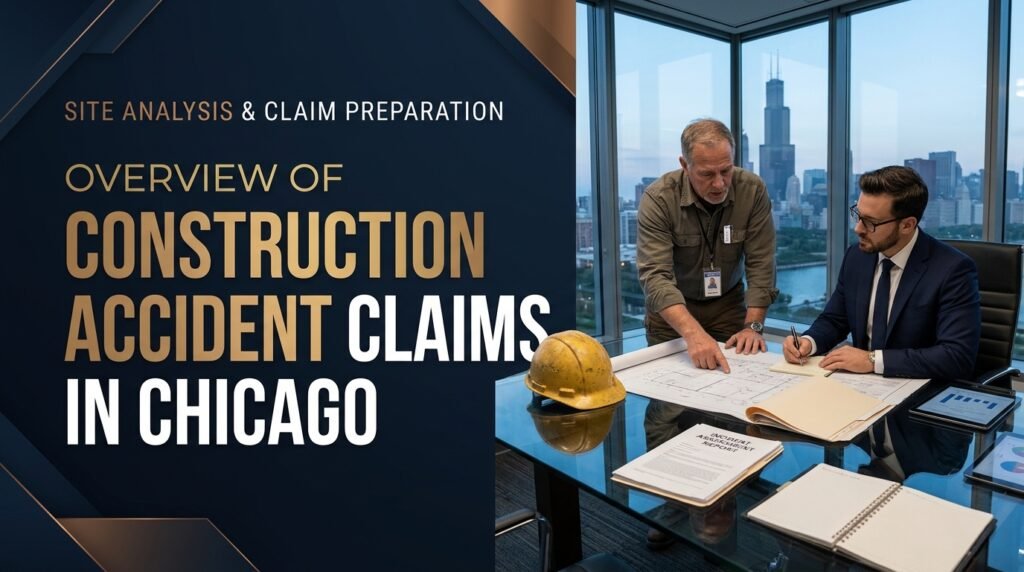
Construction projects often involve general contractors, subcontractors, equipment operators, suppliers, property owners, and workers from different trades. Each participant may have specific responsibilities relating to workplace safety, equipment, and site conditions.
Accidents may occur when scaffolding is unstable, protective barriers are missing, equipment malfunctions, or materials fall from elevated work areas. Electrical hazards, excavation incidents, and moving machinery can also cause serious injuries.
Workers’ compensation is one route for eligible employees who suffer work-related injuries. However, a separate claim may be possible when a third party’s conduct contributed to the accident.
The available legal options depend on the facts, the worker’s employment circumstances, and the applicable law. Construction site accidents attorneys may help investigate the incident, identify potentially responsible parties, and explain the procedures that apply.
Trusted Construction Accident Attorneys in Chicago
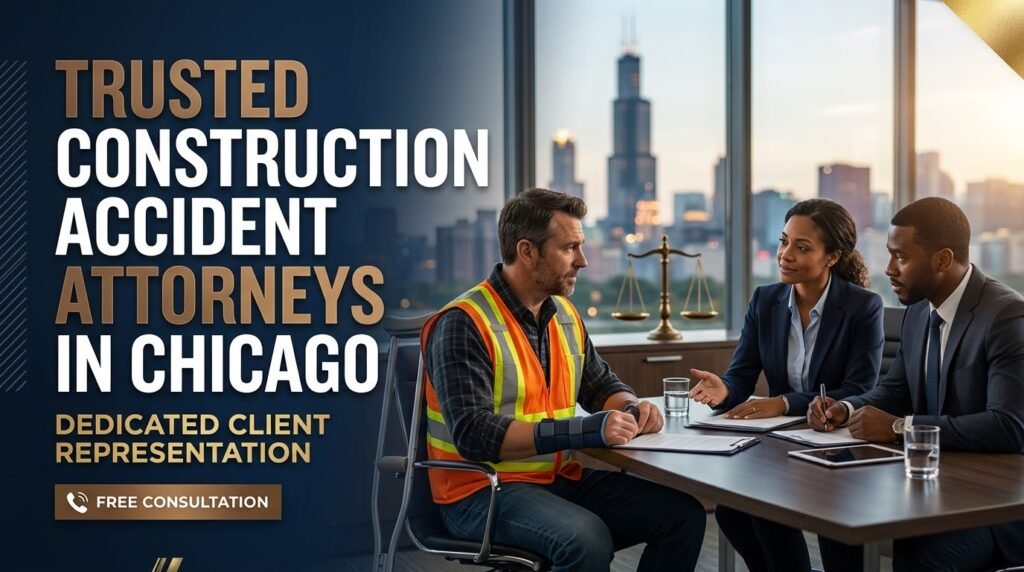
Construction injury claims can involve more than medical records and insurance forms. Depending on the circumstances, an investigation may require reviewing workplace safety procedures, construction contracts, equipment maintenance records, witness statements, and incident reports.
For example, an investigation might examine whether a contractor failed to address a known hazard, whether equipment was maintained properly, or whether a defective product contributed to the accident.
When evaluating Chicago construction accident attorneys, consider their experience with similar cases, their communication practices, and how clearly they explain legal fees and possible outcomes.
Ask how they would investigate your specific accident rather than relying on general promises about compensation. No attorney can guarantee a particular settlement or court result.
If you have suffered a construction-related injury, consider obtaining legal advice about your rights, potential claims, and applicable deadlines.
Common Causes of Construction Site Accidents
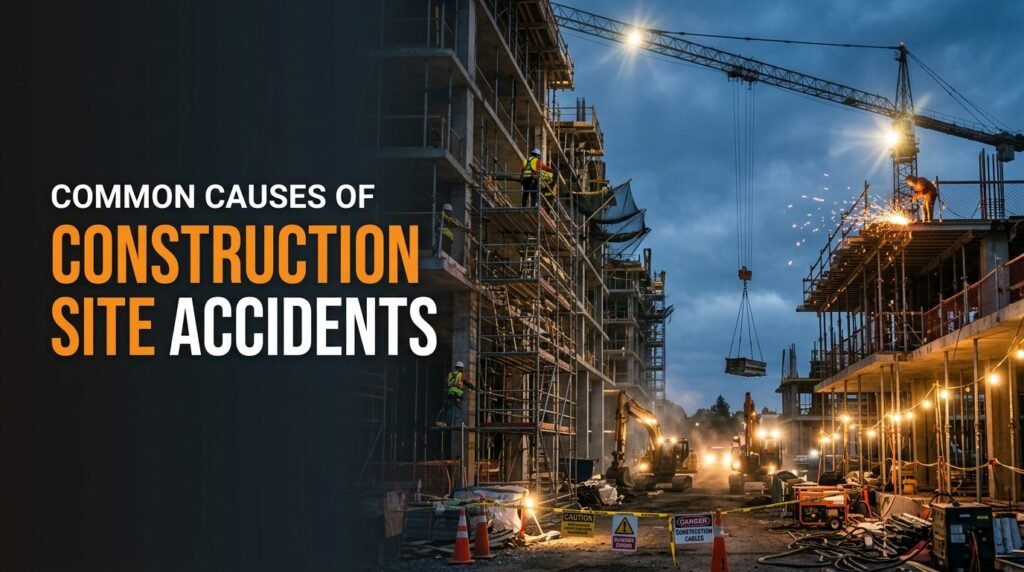
Construction accidents can result from unsafe conditions, equipment problems, inadequate protection, or failures in planning and supervision. Identifying the cause can help determine which parties and records may be relevant to a claim.
Falls From Heights and Scaffolding Accidents
Falls can occur from ladders, roofs, scaffolds, temporary platforms, and unfinished floors. Missing guardrails, unstable surfaces, improperly assembled scaffolds, and inadequate fall-protection systems may contribute to these incidents.
A fall can result in fractures, spinal injuries, traumatic brain injuries, and other conditions requiring extensive treatment. Some workers may experience lasting limitations that affect their ability to perform their previous jobs.
An investigation may examine the condition of the scaffold, available inspection records, fall-protection equipment, site procedures, and the responsibilities of the companies involved.
Falling Objects and Unsecured Materials
Tools, construction materials, and debris can fall from elevated work areas and strike workers below. The severity of an injury may depend on the object’s weight, the height from which it falls, and where it strikes the person.
Potential contributing factors include unsecured tools, unsafe material storage, inadequate overhead protection, and failure to control access to hazardous areas.
Photographs, witness accounts, safety plans, and site records may help establish how the incident occurred.
Heavy Machinery and Equipment Failures
Cranes, forklifts, excavators, and other machines operate in environments where workers may face moving parts, suspended loads, and limited visibility.
Accidents may involve improper operation, inadequate maintenance, unsuitable working conditions, or defective equipment. Identifying the actual cause is important because different circumstances can involve different responsible parties.
Investigators may review maintenance records, operator training, inspection reports, equipment manuals, and available video footage. If a product defect contributed to an injury, a product-liability claim may also warrant investigation.
Electrical Hazards
Construction workers may encounter exposed wiring, damaged cables, improperly installed electrical systems, or contact with energized equipment.
Electrical incidents can cause burns, nerve damage, cardiac complications, and other serious injuries. A worker may also suffer secondary injuries after falling following an electric shock.
An investigation may consider the electrical system’s condition, applicable safety procedures, inspection records, and the responsibilities of the contractors involved.
Trench Collapses and Structural Failures
Excavation work can become dangerous when trench walls collapse or protective systems are inadequate. Structural failures may also occur when temporary supports, formwork, or partially completed structures are unstable.
These incidents can raise complex questions about engineering, construction methods, inspections, and site supervision.
Relevant evidence may include excavation plans, engineering documents, inspection records, photographs, and statements from people who witnessed the incident.
Construction Worker Injuries and Third-Party Liability Claims
Construction injuries range from cuts and sprains to permanent disabilities. The type of injury, the treatment required, and the circumstances of the accident can affect the benefits and legal claims available.
Common construction-related injuries include:
- Broken bones and fractures: Falls, crushing incidents, and impacts from heavy objects can damage arms, legs, ribs, and other bones.
- Traumatic brain injuries: A fall or blow to the head may cause a concussion or more serious brain injury.
- Spinal cord and back injuries: These injuries can affect movement, strength, sensation, and the ability to return to work.
- Crush injuries: Heavy materials or machinery can damage muscles, nerves, bones, and internal organs.
- Burns and electrical injuries: Contact with electricity, hot materials, or certain chemicals can require extensive treatment.
- Amputations: Severe machinery incidents may result in the loss of fingers, hands, feet, or limbs.
- Respiratory and hearing problems: Exposure to certain dusts, hazardous substances, or excessive noise may cause lasting health problems.
An injury does not automatically establish that another party is legally responsible. Liability depends on the evidence, applicable duties, and the circumstances of the incident.
For example, a subcontractor may have created a hazardous condition, a manufacturer may have supplied defective equipment, or a separate company may have failed to meet its safety responsibilities.
A third-party personal injury claim may be available when the legal requirements are met. Such a claim is different from a workers’ compensation claim and may allow recovery of additional categories of damages.
Workers’ Compensation vs. Personal Injury Claims
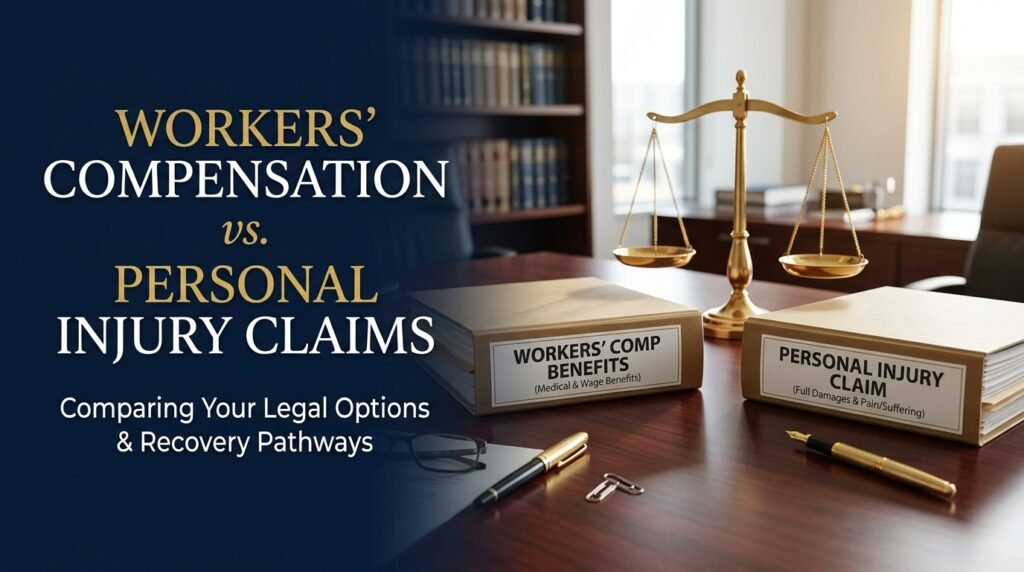
Workers’ compensation and personal injury lawsuits serve different purposes. Understanding the distinction can help injured workers identify which options may apply to their circumstances.
| Feature | Workers’ Compensation | Third-Party Personal Injury Claim |
| Main purpose | Provides qualifying benefits for work-related injuries | Seeks damages from a legally responsible third party |
| Proving fault | Generally does not require proving employer negligence | Usually requires proof of the legal elements of the claim |
| Potential benefits or damages | May include medical care and qualifying disability benefits | May include medical expenses, lost income, reduced earning capacity, and pain and suffering where legally recoverable |
| Potential defendant | Usually handled through the employer’s workers’ compensation coverage | May involve a contractor, equipment manufacturer, or another responsible third party |
| Outcome | Determined under workers’ compensation rules | Depends on liability, evidence, damages, defenses, and applicable law |
Workers’ compensation benefits are governed by statutory requirements. A third-party lawsuit follows different rules and may involve additional categories of damages.
Illinois law generally restricts ordinary negligence lawsuits against an employer for injuries covered by the Workers’ Compensation Act, subject to applicable legal exceptions. However, a claim against a separate responsible party may be possible in appropriate circumstances.
A third-party recovery can also affect workers’ compensation reimbursement rights and liens. The interaction between these claims should be considered before settling or releasing a claim.
For more information, consult the Illinois Workers’ Compensation Commission’s official Workers’ Compensation Act.
When Can You File a Claim Beyond Workers’ Compensation?
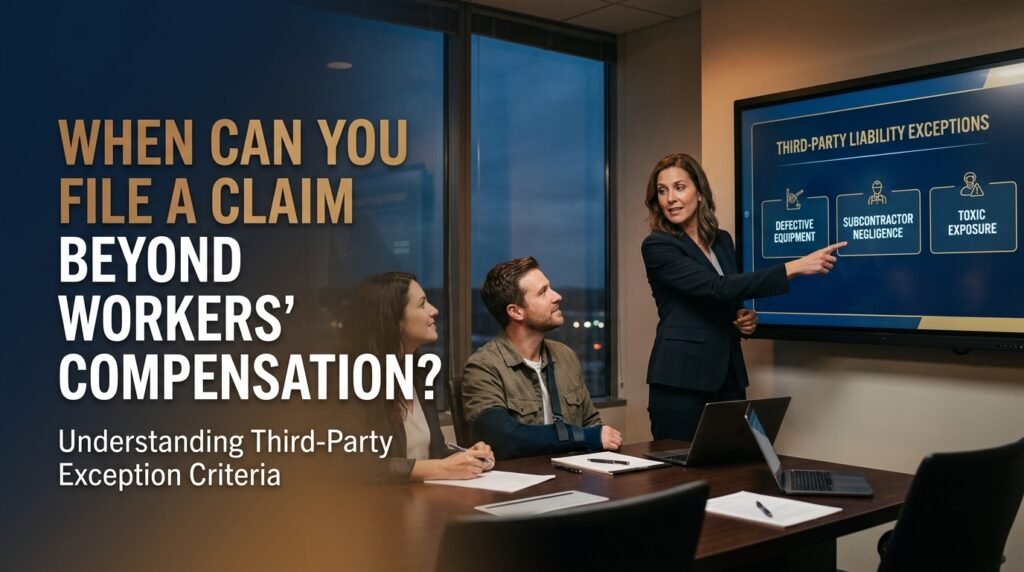
A separate claim may be worth investigating when someone other than the employer contributed to the accident.
Potential examples include:
- A subcontractor creating an unsafe condition.
- A company operating machinery in an unsafe manner.
- A manufacturer supplying equipment with a legally actionable defect.
- A contractor failing to address a hazard within its responsibilities.
- Another party contributing to a dangerous property condition.
These examples do not establish liability by themselves. The duties of each party, the evidence, possible defenses, and the facts of the accident must be evaluated.
Construction site accidents attorneys may help determine whether the evidence supports a third-party claim and explain how it could interact with workers’ compensation benefits.
What Compensation May Be Available After a Construction Accident?
The compensation available to an injured worker depends on the type of claim, the severity of the injury, the evidence, and the applicable law.
Workers’ compensation may provide qualifying medical benefits and disability-related payments. A successful third-party personal injury claim may allow recovery of additional losses that are not covered in the same way by workers’ compensation.
Medical Expenses and Rehabilitation
Serious construction injuries may require emergency treatment, surgery, medication, physical therapy, specialist appointments, or assistive devices.
In a third-party lawsuit, reasonable medical expenses attributable to the injury may be recoverable when supported by the evidence and applicable law. Workers’ compensation medical benefits are subject to separate statutory requirements.
Lost Wages and Reduced Earning Capacity
An injury may prevent a worker from returning to the same position, working the same hours, or continuing in the same occupation.
Depending on the claim, relevant financial losses may include past lost income and reduced future earning capacity. Wage records, employment information, and medical evidence may help document these losses.
Workers’ compensation wage-replacement benefits are calculated under statutory rules and should not be confused with the full measure of damages potentially available in a personal injury lawsuit.
Pain, Suffering, and Other Losses
A qualifying third-party personal injury claim may include damages for physical pain, emotional distress, disability, or the effect of an injury on everyday activities.
The availability and value of these damages depend on the circumstances and applicable law. They are not automatically included in workers’ compensation benefits.
Factors That May Affect a Claim’s Value
There is no single settlement amount that applies to every construction accident. Relevant factors may include:
- The nature and severity of the injury.
- Medical treatment and anticipated future care.
- The effect on employment and earning capacity.
- The strength of the evidence supporting liability.
- The parties’ respective fault under applicable law.
- Available insurance coverage and other recovery considerations.
Settlement figures from unrelated cases should not be treated as predictions of what another injured worker will receive.
Evidence That Can Help Support a Construction Accident Claim
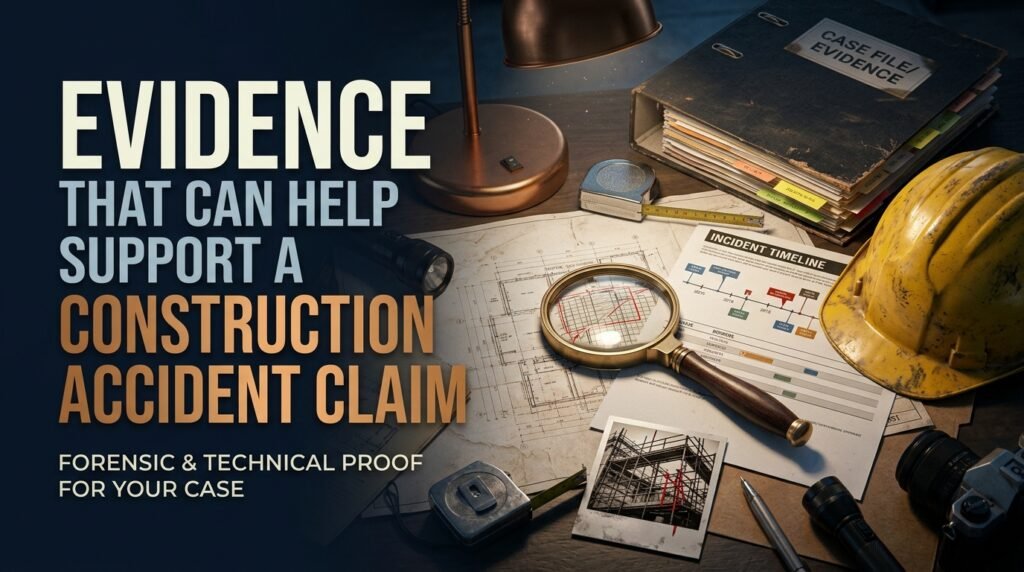
Evidence may become harder to obtain as a construction site changes and workers move to other projects. When it is safe and practical, preserving relevant information can help document the incident.
Potentially useful evidence includes:
- Photographs or videos of the accident location and visible hazards.
- Names and contact details of witnesses.
- Incident reports and relevant communications.
- Medical records and treatment instructions.
- Equipment inspection and maintenance records.
- Relevant contracts, work orders, and safety documentation.
- Employment and wage records showing financial losses.
Workers should not put themselves at risk to collect evidence or enter restricted areas. An attorney may be able to request preservation of relevant records or seek documents through appropriate legal procedures.
Steps to Take After a Construction Site Accident
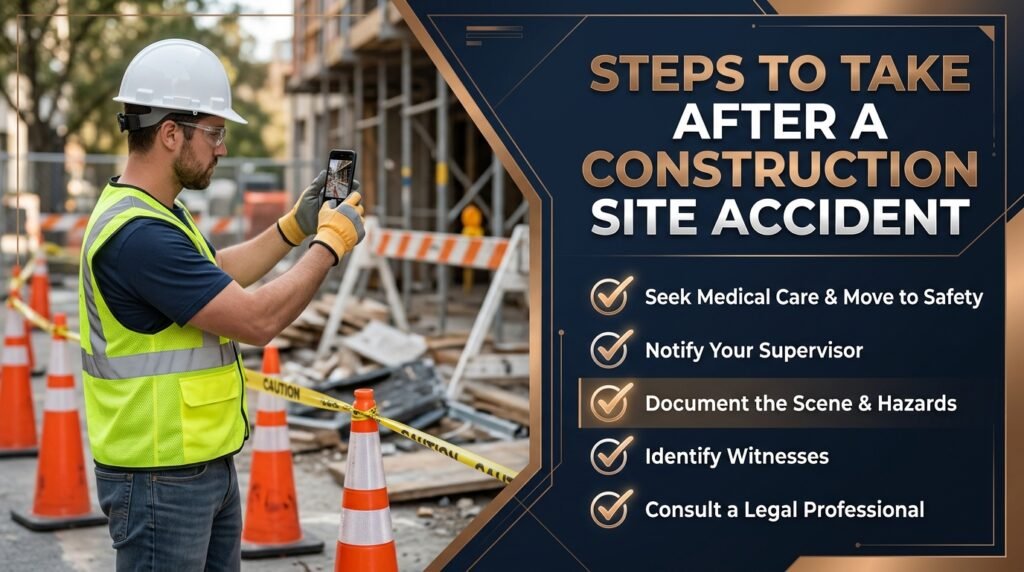
The steps taken after an accident can affect medical recovery, documentation, and the handling of a potential claim.
1. Get Medical Attention
Seek emergency assistance for serious injuries and obtain medical evaluation for other injuries as appropriate. Some symptoms may not become apparent immediately.
Follow medical instructions and keep records of treatment and related expenses.
2. Report the Workplace Injury
Notify the appropriate supervisor or employer according to workplace procedures and applicable law. Keep a record of when and how the injury was reported.
Illinois workers’ compensation law includes specific notice requirements. The applicable deadline can depend on the circumstances, so workers should not assume that informal notice to a coworker is sufficient.
3. Preserve Available Evidence
If possible, record relevant details about the location, equipment, and circumstances of the accident. Keep copies of incident reports and communications.
Do not put yourself in danger to collect evidence, alter documents, or speculate about facts you do not know.
4. Keep Track of Financial Losses
Save medical bills, receipts, wage information, and records of time missed from work. These documents may help establish the financial effects of the injury.
5. Understand Your Legal Options
An injured worker may wish to consult an attorney about workers’ compensation benefits, potential third-party liability, and deadlines that apply to the circumstances.
Before signing a settlement or release, make sure you understand which rights or claims the document may affect.
Illinois Construction Accident Filing Deadlines
Legal deadlines depend on the type of claim, the parties involved, and the circumstances of the injury.
Under 735 ILCS 5/13-202, the general limitation period for many Illinois personal injury lawsuits is two years after the cause of action accrues, subject to exceptions.
Certain claims involving the design, planning, supervision, observation, management, or construction of improvements to real property may fall under 735 ILCS 5/13-214. This statute includes a four-year period tied to when the claimant knew or reasonably should have known of the relevant act or omission, as well as a ten-year repose provision for specified claims, subject to statutory exceptions.
These special construction provisions do not automatically govern every injury that happens on a construction site. The applicable rule depends on the nature of the claim and the parties involved.
Workers’ compensation claims have separate notice and filing requirements. Claims involving public entities or other special circumstances may also have different deadlines.
Do not rely on a general deadline without checking how the law applies to the particular claim. Delaying legal advice may make it harder to preserve evidence and protect your options.
Comparative Fault in Illinois Construction Accident Cases
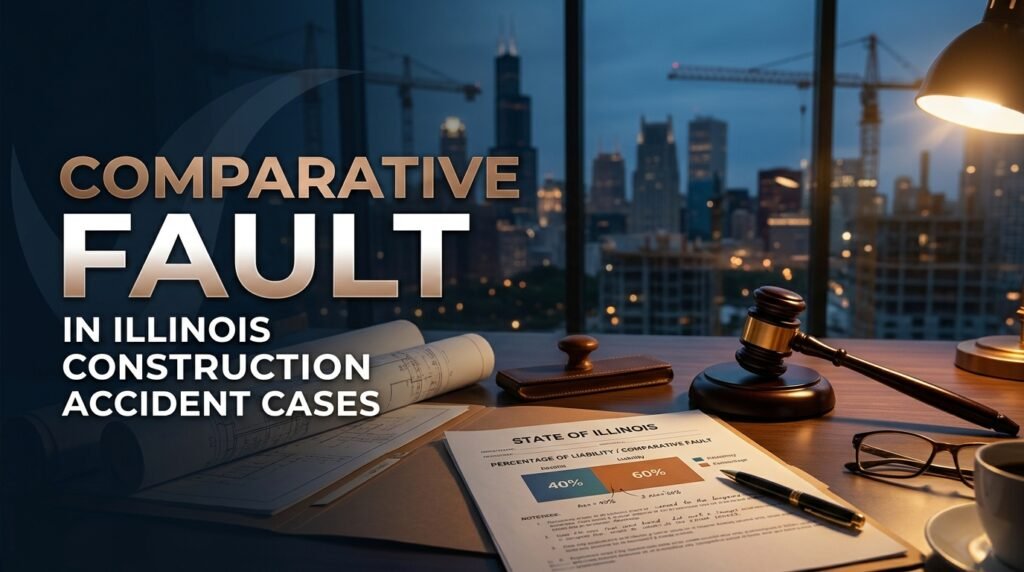
In some personal injury lawsuits, the injured person’s own conduct may become an issue.
Under 735 ILCS 5/2-1116, a plaintiff’s recovery in covered negligence-based injury cases may be barred if the plaintiff’s contributory fault is more than 50% of the proximate cause of the injury. If the plaintiff’s fault is not more than 50%, damages may be reduced in proportion to the fault attributed to the plaintiff.
The application of this rule depends on the claim and the evidence. Workers’ compensation follows a different framework and generally does not require the worker to prove employer negligence.
Frequently Asked Questions About Construction Accident Claims
What Do Construction Site Accidents Attorneys Do?
Construction site accidents attorneys investigate the circumstances of a workplace injury, explain potential legal claims, and help injured workers understand relevant procedures and deadlines.
Depending on the case, the legal work may involve a workers’ compensation claim, a third-party lawsuit, or both. Services and fees vary by law firm, so review the engagement agreement carefully before hiring an attorney.
Can I File a Claim If I Was Partly at Fault?
Possibly. Whether a partially responsible worker can recover damages depends on the type of claim and the applicable law.
For many Illinois negligence-based personal injury claims, recovery may be barred if the plaintiff’s fault is more than 50%. If the plaintiff’s fault is 50% or less, damages may be reduced according to the applicable comparative-fault rule.
Workers’ compensation operates under different rules and generally does not require the worker to prove that the employer was negligent.
Can I Receive Workers’ Compensation and File a Third-Party Lawsuit?
In some circumstances, yes. A worker may qualify for workers’ compensation benefits while also having a claim against a separate party whose conduct contributed to the injury.
The interaction between these claims may involve reimbursement rights, liens, and other legal considerations. The outcome depends on the facts and applicable law.
What If My Employer Does Not Have Workers’ Compensation Insurance?
Do not assume that you have no legal options. The appropriate steps depend on your employment status, the employer’s legal obligations, and the circumstances of the injury.
An injured worker may need to investigate applicable statutory procedures and whether another party contributed to the accident. Qualified legal advice can help clarify the available routes.
How Long Do I Have to File a Construction Accident Lawsuit in Chicago?
Many Illinois personal injury lawsuits are subject to a two-year limitation period, but exceptions and additional rules may apply. Certain construction-related claims are governed by specific provisions, and workers’ compensation deadlines are different.
The relevant deadline should be assessed promptly using the facts of the case. This article is not a substitute for advice about an individual claim.
Do I Need an Attorney After a Construction Accident?
You are not required to hire an attorney for every claim. However, legal assistance may be useful when an injury is serious, the cause is disputed, multiple companies were involved, or a third-party lawsuit may be possible.
Before making a decision, ask about the attorney’s relevant experience, fees, communication practices, and the potential risks and benefits of pursuing a claim.
Conclusion:
A construction accident can affect a worker’s health, income, family responsibilities, and ability to return to work. Understanding the cause of the incident and the available legal options can help an injured person make informed decisions during recovery.
Construction site accidents attorneys may help investigate a potential claim, identify responsible third parties, and explain how workers’ compensation and personal injury procedures differ. The appropriate approach depends on the evidence, the applicable law, and the worker’s individual circumstances.
If you were injured on a Chicago construction site, consider obtaining qualified legal advice about your rights, potential claims, and relevant deadlines. Preserve available records, follow medical guidance, and avoid assuming that every construction injury follows the same legal process.
3 thoughts on “Chicago Construction SITE AccidentS Attorneys: Understanding Your Legal Rights”