
So, are unpaid internships legal? It’s a fair question, and the answer isn’t a simple yes or no. Many students take unpaid internships every year. Some employers follow the rules. Others don’t.
If you’re wondering whether unpaid internships are illegal, it depends on who’s paying and why. The law treats nonprofits and for-profit companies differently. That’s where things get tricky, especially for anyone looking into unpaid internship California rules. California unpaid internship laws add extra layers on top of federal law, so you can’t assume one set of rules covers everything.
This guide breaks it all down. You’ll learn when unpaid internships in California cross the line, what protects you, and what to do if something feels off. Let’s dig in.
Hit by an 18-wheeler in Nashville? An accident attorney who fights trucking companies daily. Free case review, no fee unless you win.
Are Unpaid Internships Legal?

If you’re asking, “Are unpaid internships legal?” the short answer is yes, but only under specific conditions. Federal law and California law both allow unpaid internships. However, employers can’t just skip paying you because they slap the word “internship” on the job title. The Fair Labor Standards Act (FLSA) sets the baseline rules, and California Labor Code adds its own layer on top. Together, they decide when an unpaid internship is legit and when it’s really just unpaid labor dressed up in a nicer name.
So, are unpaid internships illegal in some cases? Absolutely. If your “internship” looks and feels like a real job, minimum wage law probably applies. That means back pay and possibly a wage-and-hour claim against your employer.
How Can For-Profit Employers Have Unpaid Interns?
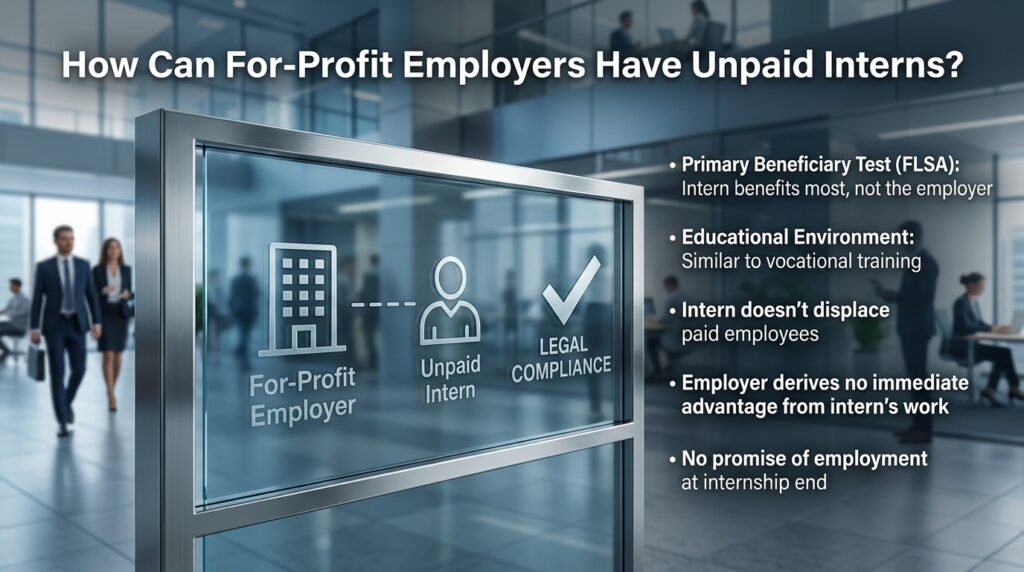
Here’s where it gets interesting. Nonprofit organizations get more leeway with unpaid internship programs. Courts generally assume volunteers at a nonprofit understand they won’t get paid. A for-profit employer, though, faces a much higher bar.
For an unpaid internship in California to hold up legally, the intern has to be the primary beneficiary of the arrangement, not the company. Think of it like a trade: you give your time and effort, and in return, you walk away with real skills, mentorship, and career-ready experience. If the company benefits most from free labor and reduced staffing costs, that’s a red flag. California unpaid internship laws exist specifically to catch employers who try to game the system this way.
The Primary Beneficiary Test Explained

The U.S. Department of Labor built the primary beneficiary test to answer one question: who’s really getting the better end of the deal, the intern or the employer? It’s not a rigid checklist. Courts weigh the whole picture instead.
This test replaced an older, stricter set of rules years ago because judges wanted flexibility. Every internship looks a little different, so a one-size-fits-all standard no longer cut it.
The Six Factors Courts Use to Apply the Test

Courts typically look at six factors when applying the Department of Labor internship test:
- Clear expectations. Both sides understand upfront that there’s no pay involved.
- Educational value. The internship mirrors training you’d get in a classroom, not just busywork.
- Academic connection. The program ties into your coursework or degree, often through college credit internship arrangements.
- Calendar flexibility. The internship works around your school schedule, not the other way around.
- Limited duration. It lasts only as long as it takes to deliver real learning value.
- No job displacement. Your work doesn’t replace a paid employee’s job.
No single factor decides the case. Judges look at the internship agreement as a whole, weighing each piece against the others.
Unpaid Internships vs. Paid Employment: Key Legal Differences
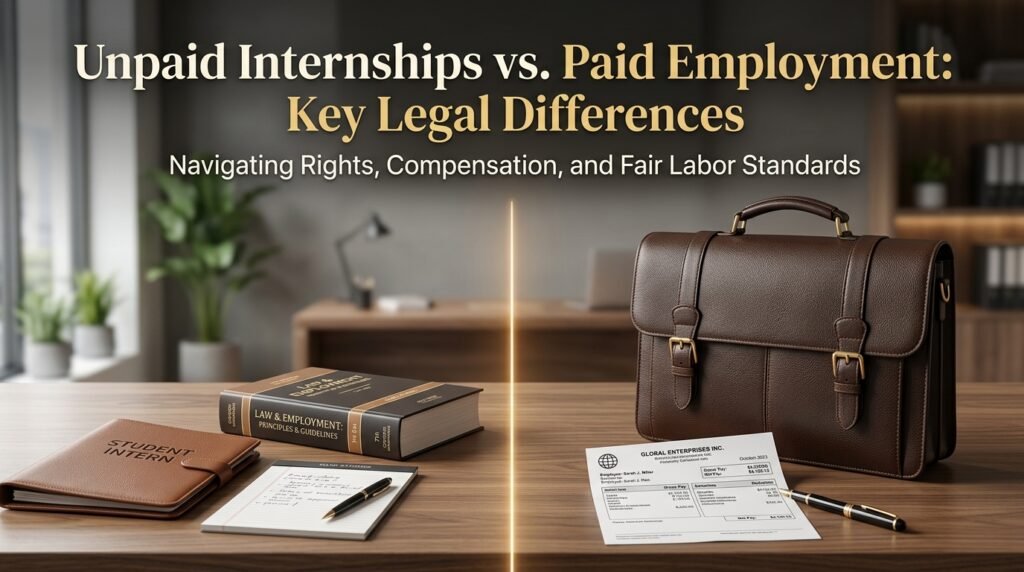
| Feature | Unpaid Internship (Legal) | Paid Employment |
| Primary beneficiary | The intern | The employer |
| Educational tie-in | Connected to a degree or academic credit | None required |
| Task type | Training-focused, supervised | Productive work benefiting the business |
| Job promise | No entitlement to future employment | Standard at-will or contract terms |
| Wage protection | Exempt if criteria met | Covered by minimum wage law |
This table breaks down the core differences employers and interns should understand. When the lines blur, that’s usually when trouble starts.
Common Signs an “Internship” Is Actually a Job
Wondering if your unpaid internship should really be a paid position? Watch for these warning signs:
- You’re doing the same tasks as paid employees on the team.
- Nobody’s training you. You’re just working.
- The company would need to hire someone else if you weren’t there.
- Your schedule ignores your class commitments entirely.
- You’ve been “interning” for months with no end date in sight.
If any of this sounds familiar, you might be dealing with internship wage theft rather than a genuine learning experience.
What to Do If You Weren’t Paid for Internship Work

First, don’t panic. You have options. Start by gathering documentation: your internship agreement, emails, timesheets, and anything showing what you actually did day to day. This evidence matters if you decide to pursue a wage claim; California allows misclassified workers to bring claims.
Next, consider talking to an employment lawyer. A quick, free consultation can tell you whether your situation qualifies as an employment rights violation. Many employment law attorneys handle these cases without any upfront cost to you.
You could also file a labor board complaint. It’s a formal route, but it puts your claim on record and can prompt an investigation into the company’s internship program.
How to Calculate Back Wages Owed for Misclassified Interns
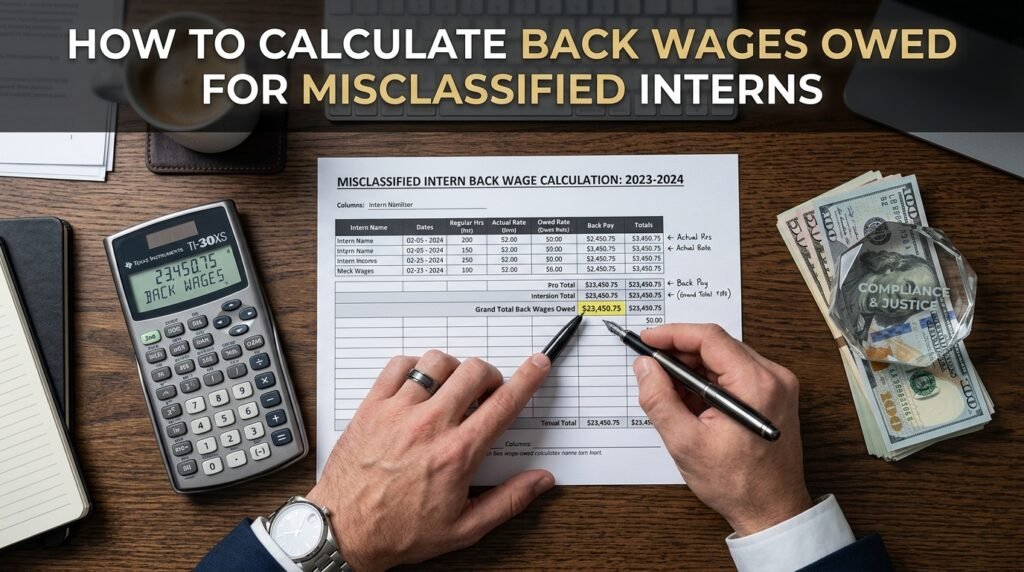
Figuring out back pay isn’t guesswork. Attorneys typically calculate it using:
- The number of hours worked, based on timesheets or reasonable estimates.
- The applicable minimum wage during your internship period.
- Any overtime owed, since internship overtime pay rules still apply once you’re classified as an employee.
- The full length of your unpaid internship, from start date to end date.
Multiply the applicable wage rate by your hours, then add any overtime differential. That total becomes the foundation of your compensation dispute. In cases involving multiple interns treated the same way, this can even grow into a class action lawsuit.
Contact a Los Angeles Employment Lawyer

If your unpaid internship left you feeling used rather than trained, you deserve answers. A Los Angeles employment attorney can review your situation, explain your rights under employee classification law, and help you figure out whether you’re owed compensation. Whether it’s a straightforward independent contractor vs. employee question or a more complex case of intern exploitation, having a workers’ rights advocate on your side changes the conversation.
Getting Legal Help Is Easy, Free, and Confidentia:l Case Evaluation.

Reaching out doesn’t cost you anything upfront. Most employment law firms offer a free, confidential legal case evaluation, so you can find out where you stand before committing to anything. Don’t wait until the internship ends and the evidence gets harder to track down. Student worker protections exist for a reason, and you shouldn’t have to fight for fair treatment alone.
Conclusion:
So, are unpaid internships legal? Yes, but only under the right conditions. The rules exist to protect you, not to trap you. If you’re asking whether unpaid internships are illegal in your case, look at who benefits most from the arrangement. That’s the real test.
If you’re dealing with an unpaid internship situation in California, know your rights first. California unpaid internship laws give you extra protection on top of federal rules. That’s a good thing. It means you have more than one way to fight back if something feels wrong.
Unpaid internships in California can be valuable; real learning happens, and real connections form. But they should never feel like exploitation. If your internship crossed the line, talk to a lawyer. You deserve fair treatment, and help is closer than you think.
are unpaid internships legal are unpaid internships legal are unpaid internships legal are unpaid internships legal are unpaid internships legal are unpaid internships legal are unpaid internships legal are unpaid internships legal are unpaid internships legal are unpaid internships legal