
What is a legal suffix? It’s the small tag that follows your last name. Think of Jr., Sr., or III. It adds extra detail to a person’s name. You’ve seen them on forms and letters. Yet many people skip past them without a second thought.
Whats a legal suffix really doing there? It tells people apart. Picture a father and son who share the same name. Without a suffix, their records could easily blur together. That confusion can cause real trouble with wills, deeds, and contracts.
So what does a legal suffix mean for you? Here’s the short answer. A legal suffix comes down to clarity and accuracy. Every legal suffix has a job to do. Now that you know what a legal suffix is, let’s explore how it works. You’ll learn the types, the rules, and the common mistakes.
Hurt in a truck crash? Kansas City truck crash attorneys ready to fight for you 24/7. Free case review, no fees unless you win. Call now.
Function

What is a legal suffix, in plain terms? It’s a short tag that follows your last name. That’s the core legal suffix definition. Its purpose is to distinguish people with the same name. Think of a father and son who share every name. Without a tag, their files blur together. That’s a legal suffix in action. A legal name suffix such as Jr. or Sr. gives each man his own identity on paper. Once you see how legal suffixes work, the whole idea clicks. They support legal identification and name accuracy. They also keep father and son names from colliding in official records.
Component

Every suffix in a legal name has its own place. Your full legal name comes first. That means your first, middle, and last names. The suffix follows the last name. A typical legal name format looks like this: Daniel Ray Carter Jr. The suffix itself takes a few shapes. A Roman numeral suffix, such as II, III, or IV, marks later generations. Suffix abbreviations like Jr. and Sr. do the same job with letters. Then there’s the professional suffix. Esq. is the classic example. It signals a career rather than a family line. Together, these pieces build a formal name structure. Databases then rely on it to match names.
Protocol

Follow a few name suffix rules, and you’ll dodge most headaches. First, place the suffix after the last name. That’s correct suffix placement. Second, watch the name suffix order. A generational suffix comes first. A professional suffix follows, as in Daniel Carter III, Esq. Third, match your suffix punctuation to the document. Some styles add a comma before Jr. Others skip it. Pick one style and stick with it. Steady suffix formatting supports name standardization and record consistency. Finally, copy your name exactly as your ID shows it. Legal naming conventions reward that habit. So does proper name usage.
Significance

Legal suffixes matter because they build trust. A missing suffix can send a file to the wrong person. Picture a bank with two account holders named Michael Reed. One wrong click and the money lands in the wrong account. A suffix supports identity verification and legal name verification. It also helps with distinguishing individuals across official records. The result is legal clarity and avoiding confusion. That’s the heart of legal suffix meaning. It protects document validity before problems start.
Common Legal Name Suffixes (Jr., Sr., III, Esq.)
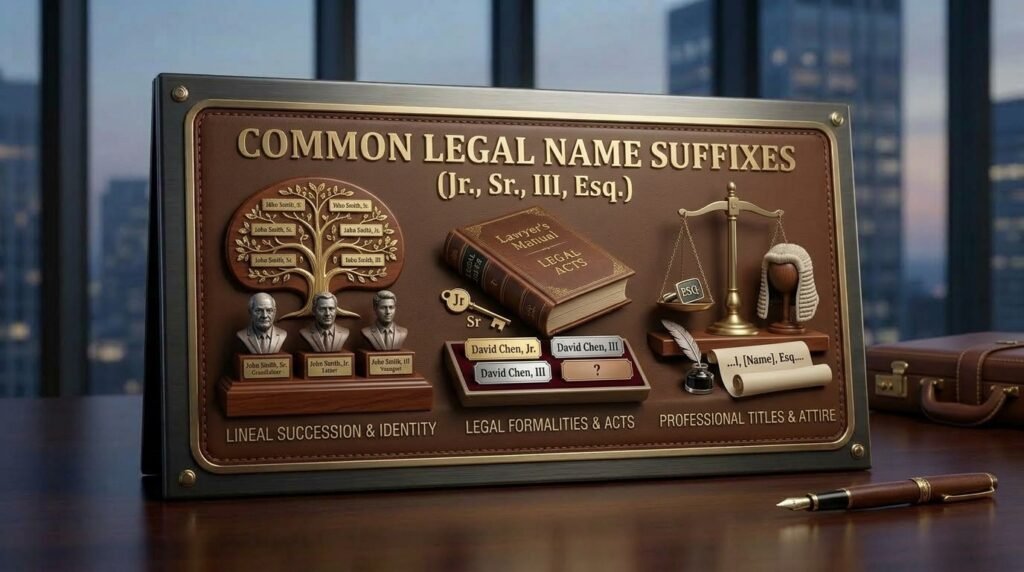
Ready for some name suffix examples? Here are the ones you’ll meet most often.
- Jr. (Junior): a son who shares his father’s full name.
- Sr. (Senior): the father in that pair.
- II, III, IV: later generations or relatives who carry the same name.
- Esq. (Esquire): a courtesy title used by attorneys in the United States.
Each one answers a different question. Jr. and Sr. meaning centers on father and son. The III suffix meaning points to the third person in the line. Esq. has nothing to do with family. Instead, it shows that a person practices law.
Jr. vs. Sr. vs. III: What’s the Difference?

Jr. and Sr. apply to two people. The father is Sr. The son is Jr. Then things get interesting. When the name keeps traveling, II and III step in. They often mark a grandson or a nephew. Think of them as generational identifiers. Families follow different habits here. Some drop Jr. after the father passes away. However, your legal records should follow your ID.
Now for suffix vs. title. A title such as Dr. or Mr. comes before your name. A suffix sits after it. Esq. lives in a gray zone. It follows the name yet describes a job.
Legal Suffixes in Contracts and Court Documents
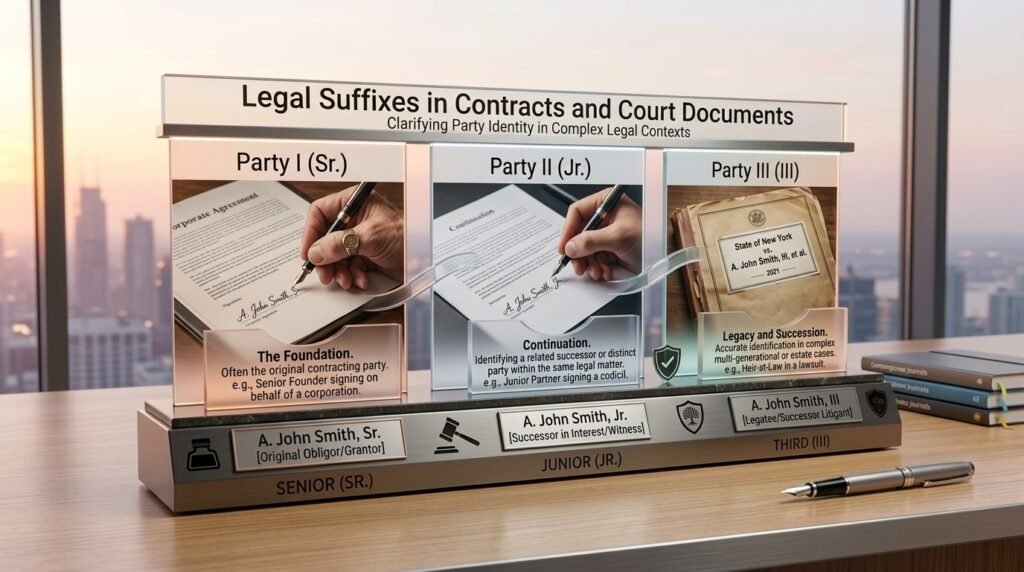
A suffix on a contract shows who signed the deal. Courts want no doubt about the parties. That’s why suffixes appear in court document captions, orders, and judgments. Imagine a judgment against James Porter. Two men in town carry that name. Someone’s credit report pays the price.
Contract signatures follow the same logic. Sign the way the contract prints your name. A suffix on a signature should match the typed name below it. Government forms and other legal forms usually offer a separate box for suffixes. Use it.
Your suffix on a driver’s license matters too. Agencies compare IDs against other records. A suffix on a birth certificate can start the paper trail if parents choose one at birth. Legal documents treat the suffix as part of your name. Any suffix on legal documents should match across the board. Legal name requirements vary by agency. So check the instructions before you file.
Suffixes on Wills, Trusts, and Beneficiary Forms

Estate planning documents demand extra care. A suffix on a will names the right heir. A suffix on a trust pins down the trustee or beneficiary. A suffix on a deed keeps property titles clean.
Suppose a father leaves his house to Michael Reed. His son is Michael Reed Jr. Who inherits? Without a suffix, a family fight may follow. Beneficiary identification works best with the full legal name and a date of birth. A suffix on beneficiary forms closes the gap. When in doubt, ask the attorney or the institution.
Common Mistakes With Legal Suffixes

Most common suffix mistakes look small. They still cause real delays. People drop the suffix on one form and keep it on another. Others swap Jr. for III without checking family history. Some place the suffix before the last name. That breaks correct suffix placement.
Another slip involves Esq. You shouldn’t add it to your own name on a form or signature. It’s a courtesy that others use for you. And here’s a sneaky one. A legal name change doesn’t always touch your suffix. Ask the court or agency whether to keep it or drop it.
Do Suffixes Affect Legal Validity?

Usually a missing suffix won’t void a document by itself. Courts look at identity and intent. However, a mismatch can slow you down. A bank might freeze a transfer. An agency might reject a form. In a dispute, a missing suffix can raise questions about which person the paper covers. Document validity depends on many factors. Rules also differ by state. So talk with a licensed attorney about your situation. Keep in mind that general information isn’t legal advice.
Beneficiary Information Clause

Many forms include a beneficiary information clause. It asks for a name, a relationship, and a few identifiers. Always list the full legal name with the suffix. Then add a date of birth if the form allows. That habit supports legal name verification and legal clarity. Here’s a simple sample:
Beneficiary: Daniel Ray Carter Jr., son of the account holder, born [date of birth].
Conclusion:
So, what is a legal suffix? It’s a short tag after your last name. Jr., Sr., III, and Esq. are the common ones. Each one has a clear job. The meaning of a legal suffix is simple. It tells one person apart from another.
What’s a legal suffix worth to you? Quite a lot. It keeps wills, deeds, contracts, and IDs accurate. Many people still ask, what does legal suffix mean on my driver’s license? It means your record stays clean. A missing suffix can slow down a bank or an agency.
Now you know what a legal suffix is and why it matters. Use it the same way on every form. Match your ID each time. Not sure what a legal suffix is for your situation? Ask a licensed attorney. A quick question today can save you a long headache tomorrow.
what is a legal suffix what is a legal suffix what is a legal suffix what is a legal suffix what is a legal suffix what is a legal suffix what is a legal suffix what is a legal suffix what is a legal suffixwhat is a legal suffix what is a legal suffix what is a legal suffix what is a legal suffix